from wrapper to wearable
How a piece of trash becomes a piece of jewelry.
Every earring, stitch marker, and keychain goes through the same hands-on process — no shortcuts, no machines doing the shaping for us.
Collect
Wrappers from snacks, candy, and juice pouches are set aside instead of thrown out — from our own kitchen and from friends and neighbors who save them for us.
Clean & sort
Every wrapper is washed, dried, and sorted by color, thickness, and material — because what a wrapper is made of decides what it can become.
Cut & shape
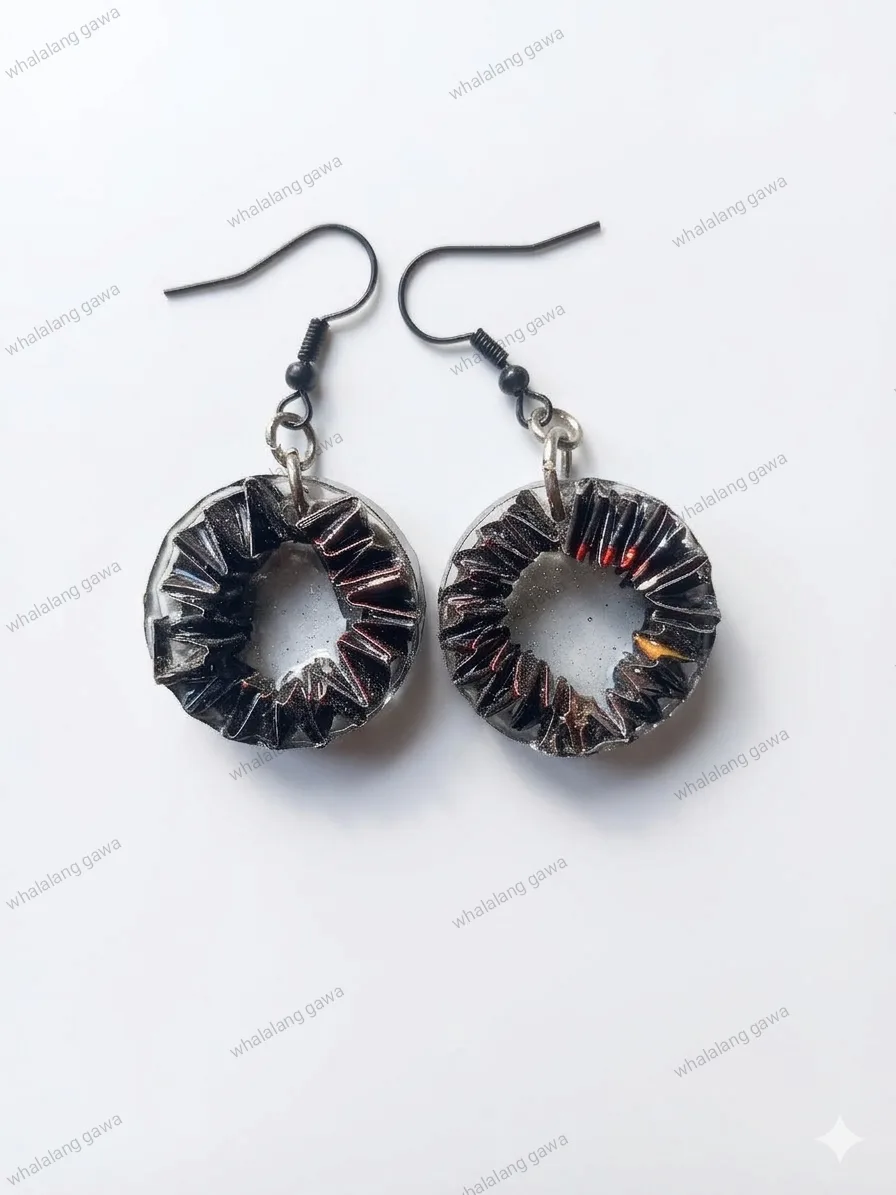
Depending on the design, the material is cut into strips for weaving, flattened into shards for resin casting, or set aside entirely for a yarn-based piece instead.
Cast, knit, or crochet
Resin pieces are cast around the prepared plastic and cured by hand. Keychains and dolls are knit or crocheted stitch by stitch from yarn — some of it scrap ends from earlier projects.
Sand & finish
Resin pieces are sanded and polished smooth. Findings — hooks, jump rings, clasps — are attached by hand.
Quality check & pack
Every piece is checked for sharp edges, loose stitches, or weak resin before it's packed carefully for its trip to you.
Why it takes this long
Machines can't sort a torn candy wrapper from a chip pack, and they definitely can't knit a coconut keychain. Every step above happens by hand — which is also why quantities are limited and pieces sell out.